The Complete Checklist for a Better Night's Sleep in a Noisy Neighbourhood
It starts at 5.42am with the first bin lorry, or at eleven at night when next door's television settles into a bassline you can feel through the mattress. Noise is the one problem a home cannot solve on its own, which is why it usually gets solved in layers: a seal here, a pair of earplugs there, a fan left running on the landing.
What follows is a room-by-room checklist, not a shopping list. You do not need a builder, a second mortgage or anyone's permission. Start with the loudest problem, add one layer at a time, and give each change a few nights before deciding whether it works. Some of it is equipment. More of it is routine.
Work Out What You Are Actually Hearing
Before spending a penny, sit on the edge of the bed at about eleven, lights off, and listen properly. Note the times and the direction. Most household noise falls into one of three groups, and each responds to different fixes.
- Airborne noise — voices, music, televisions, dogs. It travels through gaps: under doors, around window frames, through letterboxes and shared vents. This is the easiest type to reduce yourself.
- Impact noise — footsteps, doors slamming, chairs scraping, a washing machine on a spin cycle. It moves through the structure of the building, so rugs, mats and a polite word upstairs do more than foam ever will.
- External noise — traffic, deliveries, late-night revellers, roadworks. Glazing, mass and masking sound are your tools here.
Write it down, even if it feels obsessive. A short list of times and culprits stops you buying the wrong thing entirely, and it is surprisingly useful if you ever need to raise the issue with a landlord or the council.
Sealing the Bedroom: The Cheapest Real Win
Sound behaves like water. It finds the gap. Stand in your bedroom with the door shut and the world muted, then ask where the noise is loudest. That spot is your starting point.
Windows
An old sash window with a two-millimetre gap is an open microphone for the street. A roll of draught strip costs very little and takes twenty minutes. Heavier curtains help more than people expect, particularly lined ones that reach the floor and overlap in the middle. If your window is a single-glazed sash, a removable secondary panel or a sheet of window film over the frame in winter makes a noticeable difference to both traffic hum and heat loss. For a rattling frame, a rolled towel along the sill will do until you can do better.
Doors and gaps
The gap under a bedroom door is a direct line to the hallway, the stairs and everyone else's evening. A brush strip or rubber seal fixes it in minutes. A fabric draught excluder works too, and doubles as a small amount of extra mass. If your door is hollow, hang a heavy blanket or curtain on the bedroom side; it takes the edge off voices in the next room.
One caution: do not seal a room until it is airless. Crack a window on the quiet side for ten minutes earlier in the evening, or keep trickle vents open. A stuffy room will wake you just as reliably as a noisy one.
Earplugs: Fit Beats Brand
Most people who say earplugs do not work have never fitted a pair properly. Foam plugs are cheap, effective and slightly muffling; silicone and wax versions sit flatter and suit side sleepers better. If you have narrow ear canals or a history of ear infections, a pharmacist, GP or audiologist is the right person to ask before you make a nightly habit of anything.
Technique matters more than the price tag:
- Roll a foam plug between your fingers into a thin cylinder, with no creases.
- Reach over your head and gently pull the top of your ear upwards and outwards.
- Push the plug in with your other hand, then hold it for twenty to thirty seconds while it expands.
Do that and a decent pair of foam plugs will quieten far more than a badly seated expensive one. Expect three or four odd-feeling nights before your brain stops noticing them. Keep them clean, replace them when they stop springing back, and see a GP if you develop pain, ringing or a blocked feeling that does not settle.
Masking Sound, Done Properly
Masking does not delete noise. It raises the background level so that a car door slamming at 2am is no longer a shock. The aim is steady and boring, never interesting.
A simple fan is still the most reliable option, and it runs all night without a timer cutting out at 4am. White noise suits higher-pitched hiss, such as distant traffic or a shower running; brown or pink noise sits lower and works better against bass from next door. Place the source between you and the noise, near the window or the shared wall, not on your pillow. If you can clearly hear it as a sound in its own right, it is too loud. Melodic music, podcasts and the radio are poor choices overnight, because your brain follows them instead of letting go.
The Bed, the Bedding and the Bedside Kit
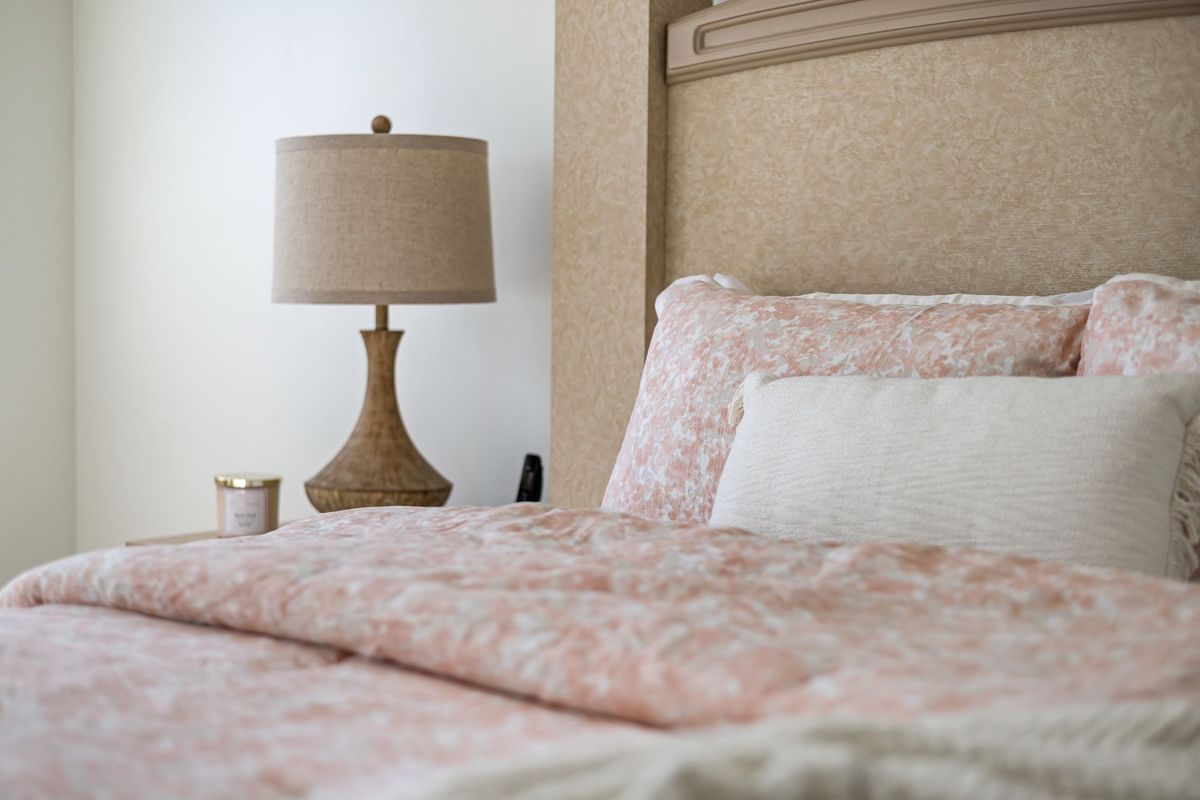
Your mattress will never block a neighbour, but comfort is what carries you through the wake-ups you cannot prevent. Brushed cotton and flannel rustle less than crisp percale, and a slightly heavier duvet gives a sense of enclosure that helps on nights when you are already tense. If the frame creaks, tighten every bolt and add felt pads at the joints and under the legs.
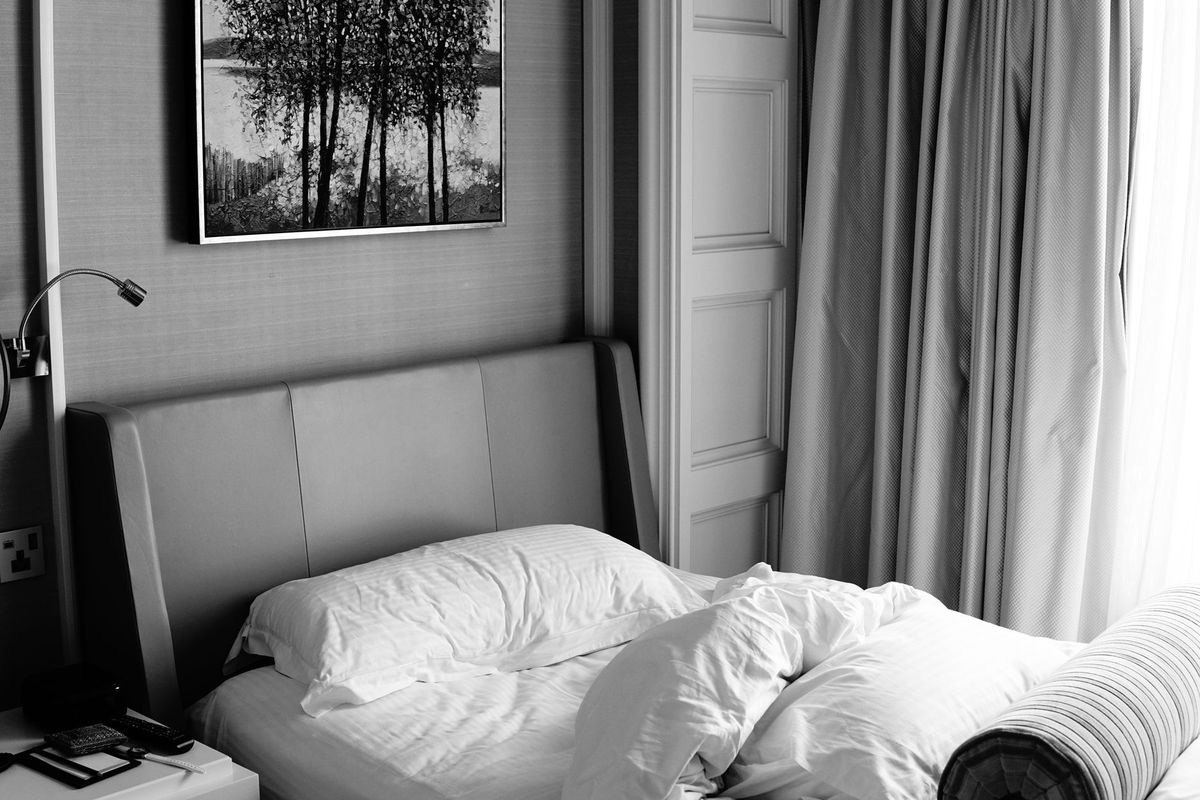
Keep the bedside table working for you rather than against you:
- Your fitted earplugs in a small tin, plus a spare pair
- A fan or sound machine on a remote plug, within reach without sitting up
- A notepad and pen, so a 3am thought gets written down instead of rehearsed
- Water, and a light blanket you can throw off without waking fully
- Your phone face down, or better still, charging across the room
Bedtime Habits That Do the Heavy Lifting
A consistent wake time does more for sleep than a perfect bedtime. Caffeine after early afternoon and alcohol in the evening both tend to produce a 3am waking, which is exactly when the neighbour's boiler kicks in. A warm shower an hour before bed, dim lights and a screen curfew of thirty minutes will not silence the street, but they make you far less reactive to it.
When you do wake, resist the urge to lie there calculating how many hours are left. If you are still awake after twenty minutes or so, get up, keep your earplugs in, sit somewhere dim and return when you feel sleepy. If noise is a persistent problem, deal with it in daylight: a friendly note, a word with the landlord, or a report to the council about repeated late-night works. Daylight conversations are calmer and more effective. Persistent insomnia, anxiety about sleep or ringing in the ears deserves a conversation with your GP rather than another gadget.
Your First Week
Change one thing at a time, so you know what actually worked.
- Night one: sit in the dark and note the noises, with times.
- Night two: seal the door gap and the window draught.
- Night three: fit your earplugs properly and sleep in them.
- Night four: set up masking sound at low volume near the window.
- Night five: sort the bedding, the pillows and the bedside kit.
- Weekend: walk the rest of the house. Felt pads under chairs, a rug on hard floors, the washing machine finished before nine in the evening, a draught strip on the living room door.
A quiet bedroom is rarely the result of one clever purchase. It is a stack of small, boring fixes, most of which you will forget you ever made. That is the point.
Photo: Noel Nicolas / Pexels