Beginner's Guide to White Noise Machines: Do They Really Help You Sleep?
A fan whirring in the corner. Rain on a tent. The low hum of an aircraft cabin. Most of us have fallen asleep to steady noise at some point, whether we meant to or not. A white noise machine turns that accident into a feature: a small box on the bedside table that plays the same even sound, all night, every night. It sounds sensible. It can also be useless, or mildly annoying, depending on how you set it up. Here is what the different types of noise actually do, who tends to benefit, and how to use one without making your sleep worse.
What White Noise Actually Does
White noise is a broad spread of sound frequencies played at once, which our ears hear as a steady hiss. Think static between radio stations, or a fan running on a high setting. The point is not the hiss itself but the masking effect.
Your brain is wired to notice change. A car door slamming, a floorboard creaking, a neighbour's bin lid at half six — these are spikes against a quiet background, and spikes are what wake people up. Steady sound raises the background level of the room, so those spikes have less contrast. You may still hear them; they simply stop being dramatic.
That is worth being clear about. White noise does not cancel sound, and it does not sedate you. It blurs the edges of your environment. If your problem is noise, that can help a great deal. If your problem is a racing mind at midnight, it will do very little.
White, Pink and Brown: What's the Difference?
The colours refer to how the sound energy is balanced across frequencies. In practice, that means how bright or deep the noise sounds.
- White noise spreads energy evenly across the range, giving a bright, hissy sound — static, a shower, a fan at full tilt. Good at masking high-pitched interruptions, but some people find it harsh after an hour or two.
- Pink noise carries more energy in the lower frequencies, so it sounds softer and more balanced. Steady rainfall, rustling leaves and a gentle heartbeat all sit somewhere near here. For sleeping, many people find it the easiest of the three to leave running.
- Brown noise goes deeper again: a low rumble, like a distant waterfall or the sea heard through a wall. It can feel more like a physical presence than a sound, which some people love and others find oppressive.
You will also see blue and violet noise advertised. Both are brighter and more piercing than white, and they are usually aimed at concentration rather than sleep. Marketing names such as "green noise" are not precise categories — they tend to describe mid-range sounds like rain or a stream. The label matters less than whether the tone is steady and pleasant to your ear.
Who Tends to Benefit — and Who Doesn't
White noise suits people whose sleep is broken by unpredictable sound: light sleepers in flats with thin walls, anyone living near a road, railway or flight path, shift workers sleeping through daytime traffic, and people sharing a bed with a snorer. It can also take the edge off an unfamiliar hotel room, and some people with tinnitus find that gentle masking makes the ringing less noticeable — though if tinnitus is troubling you, it is worth speaking to your GP or an audiologist rather than self-treating indefinitely.
It is less likely to help if you need genuine quiet to drop off, if you find constant sound irritating rather than soothing, or if the real problem is a late caffeine habit, an irregular bedtime or a warm, bright bedroom. Parents often use noise machines for babies and young children; keep the volume low and the machine well away from the cot, and never loud enough to drown out a cry or a smoke alarm.
How to Use One Without Wrecking Your Sleep
Volume and Placement
Set the volume just high enough to soften the sounds that wake you. A useful test: you should still be able to hear a normal conversation in the room and a smoke alarm without straining. If you have to raise your voice to speak, it is too loud, and long exposure to loud noise is not kind to your hearing.
Then move it. Distance makes a surprising difference, so place the machine at least a metre from your head — across the room, on a chest of drawers, or on the floor beside the bed rather than on the mattress. Point it away from you, towards the wall or the window where the disruptive noise comes from.
Sound Choice and Timing
- Pick a steady sound. Tracks with waves that swell, birdsong or random chimes introduce exactly the kind of change that wakes light sleepers.
- Try a fade-out timer. Some people fall asleep faster with noise but sleep more deeply once it stops. If the moment it switches off wakes you, run it all night instead.
- Start it during your wind-down, not at lights out, so your brain learns to link the sound with settling rather than with the last-minute scramble.
- Give it a week. Keep a two-line note each morning of how long you took to fall asleep and how often you woke, so you can judge with something other than a vague feeling.
- Do not turn the volume up to fight a genuinely loud problem. Sort the source with better glazing, a heavier curtain or earplugs, and keep the machine quiet.
Choosing a Machine Without Overthinking It
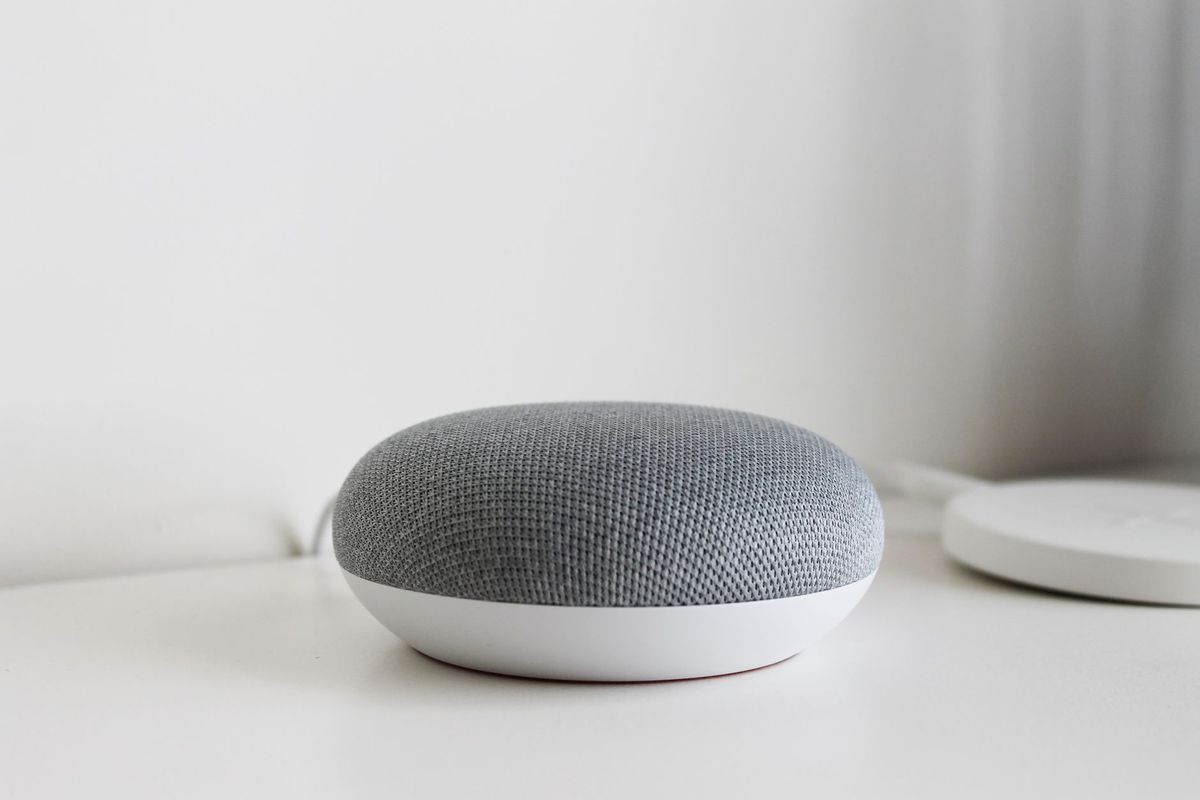
Most of the price difference comes down to build quality, speaker size and how low the volume will go. Check for a continuous loop without clicks or gaps, an adjustable volume whose minimum is genuinely quiet, and a tone you would happily hear for eight hours. Fan-based machines add a mechanical hum and a bit of air movement; digital ones play looped audio, which is usually more portable. Battery power and a timer are handy; app control and voice assistants rarely earn their keep on a bedside table.
Before buying anything, test the idea for free. A desk fan, a phone app, or a radio tuned between stations will tell you within a few nights whether masking helps you. If you use a phone, put it in flight mode so notifications do not undo the good work.
When Noise Isn't the Answer
A white noise machine is a tool for one job: smoothing out a noisy environment so your body can do what it already knows how to do. It is not a treatment for insomnia, and it should never be the loudest thing in your bedroom.
If you have been sleeping badly for more than a few weeks, if you wake gasping or snore heavily, or if you feel exhausted despite adequate hours in bed, see your GP. Those patterns deserve a proper look rather than another gadget. For everyone else, the sensible approach is unglamorous: a consistent bedtime, a dark and cool room, less caffeine after lunch, and a modest, steady hum in the background if it helps. Try it for a fortnight. Keep it if you are sleeping better, and switch it off without regret if you are not.
Photo: Anton / Pexels