Cosy Decor Mistakes That Make a Room Feel Louder and How to Fix Them
A room can feel loud before anyone raises their voice. Sound bounces off bare floorboards, glass and painted plaster, and what you hear is a hard, hollow edge to ordinary life: a chair scraping back, a kettle switching on, a phone rattling on the worktop. Usually this is a decorating problem rather than a structural one. A few textiles, a little thought about where things sit, and the same square metres can feel noticeably softer.
Why Some Rooms Sound Louder Than Others
Echo happens when sound hits hard, smooth, flat surfaces and bounces straight back instead of being absorbed. Soft, thick and slightly porous materials — wool, cotton, velvet, felt, jute, heavy linen — take some of that energy in and let it go quietly. Thin, tightly woven fabric does much less. So the answer is not simply "add cushions", but "add mass and texture where sound actually lands".
The biggest offenders in most homes are floors, windows and empty walls, roughly in that order. Work through them and you will feel the difference well before you finish the room.
Mistake One: Bare Floors With a Rug That's Too Small
Hard flooring makes sense with pets, muddy boots and underfloor heating. But a wide expanse of wood, tile or laminate is the single biggest contributor to a hollow-sounding room. A small rug placed in the centre is often worse than nothing, because it commits you to a hard floor without doing any absorbing.
Choose the largest rug the space can carry. A useful rule is that the front legs of the sofa should sit on it, with a clear border of floor around the edges so the rug looks deliberate rather than wall-to-wall. Underneath it, add a felt or wool underlay; the combination of thickness and density does far more than a decorative top layer alone. In hallways and along the side of a bed, a runner softens the sound of footsteps without carpeting the whole space.
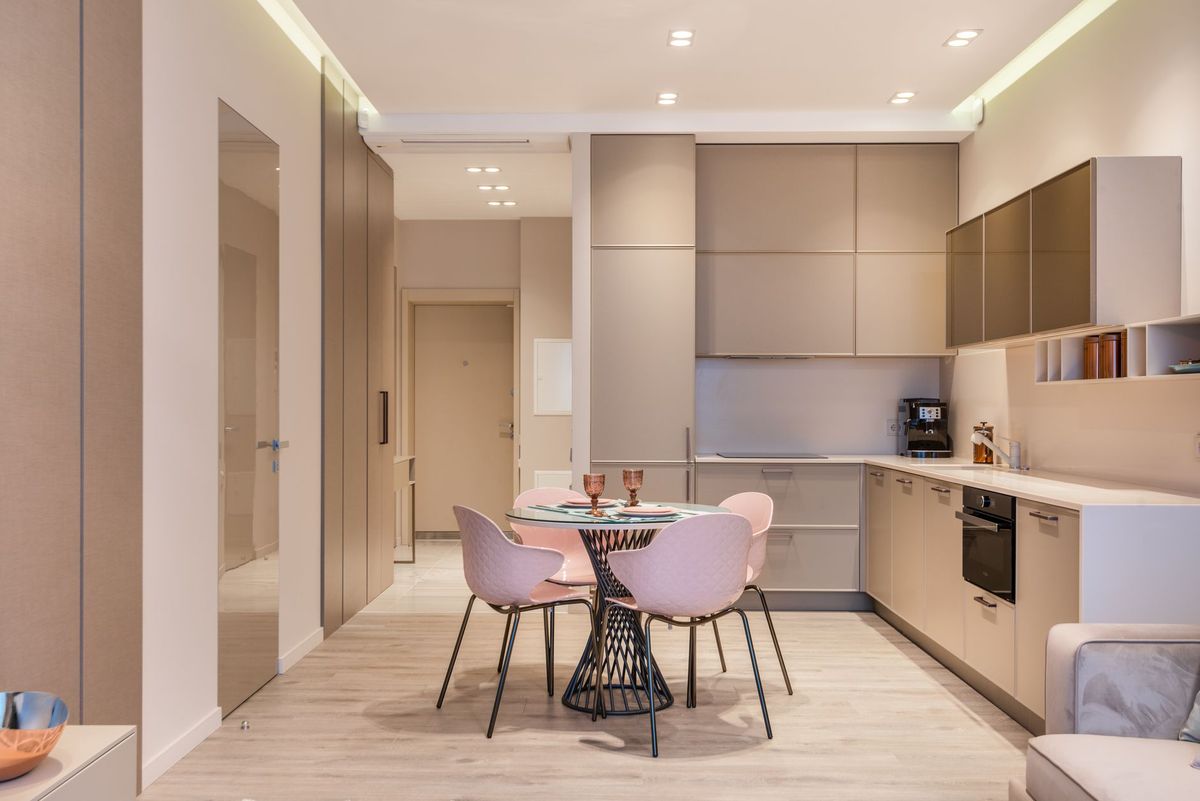
Details matter too. Felt pads on the feet of dining chairs and stools stop that awful scrape across a hard floor, and a rug under the table captures the clatter of cutlery and crockery. If you have hard flooring in a kitchen-diner, a washable cotton or jute runner in front of the sink and hob is one of the cheapest quiet wins available.
Mistake Two: Windows Covered by Hard Materials
Wooden Venetian blinds, thin roller blinds and shutters suit period houses and contemporary kitchens alike, and nobody is suggesting you rip them out. But they are hard surfaces sitting in the one place where sound escapes to the outside world and comes back off the glass.
Curtains, especially floor-length and lined, change how a room sounds more than almost any other single purchase. They also soften the light, which helps the room feel calmer in the evening. If you prefer a cleaner line, hang a simple wool or heavyweight linen curtain on a recessed track so it reads as part of the wall. Interlining — a layer of soft wadding between the face fabric and the lining — adds bulk without making the curtain awkward to draw.
Where a radiator sits under the window, keep curtains short enough to clear the heat, or use a fabric-faced Roman blind with a generous drop. Either way, avoid pinning heavy fabric over a heat source.
Mistake Three: Furniture That's Hard to the Touch
Glass-topped tables, leather sofas, chrome legs and metal-framed chairs all reflect sound. They can look sharp and grown-up, but a whole room of them will ring.
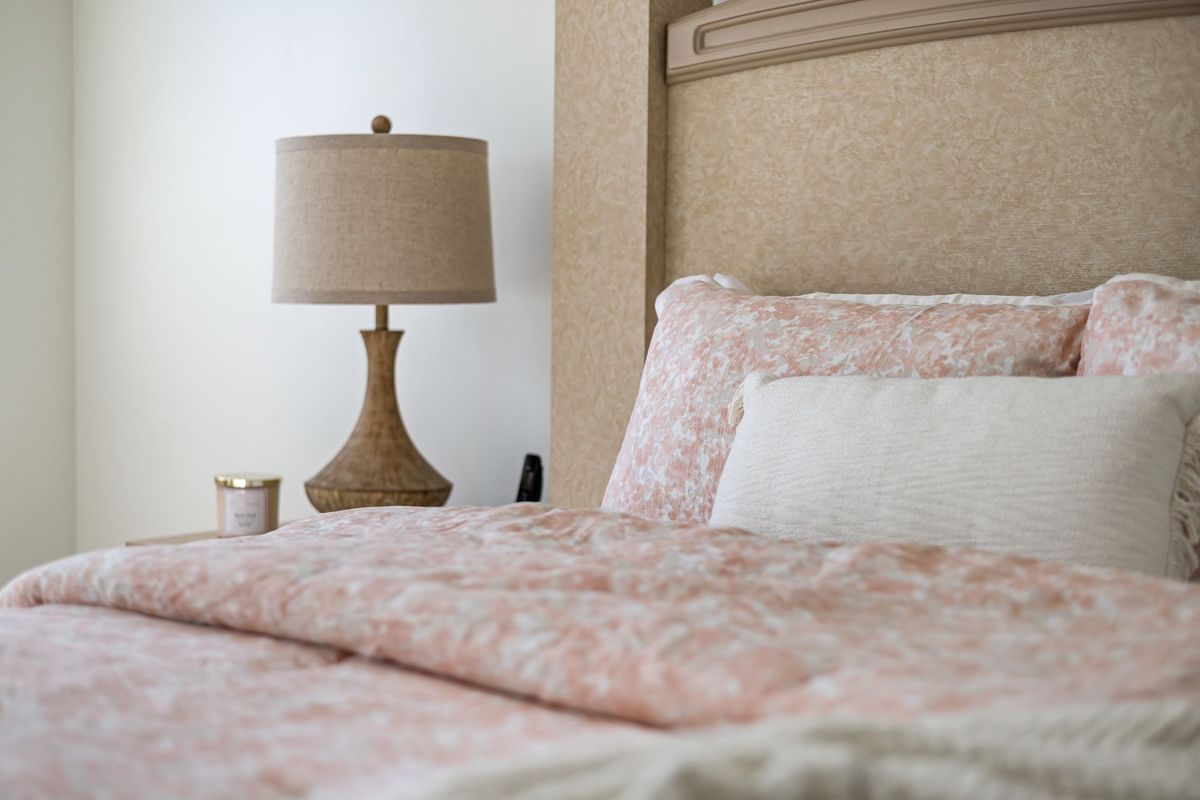
You do not have to replace anything. A loose cotton or linen slipcover over a leather sofa, an upholstered bench instead of a wooden one at the dining table, a fabric headboard rather than a painted panel behind the bed: each of these adds a soft surface at exactly the height where voices and music sit. Cushions help only if they are deep and filled generously — a row of thin decorative squares is decoration, not absorption. A wool throw over the back of an armchair pulls its weight as well.
Mistake Four: Seating Pushed Into the Corners
When every piece of furniture hugs the skirting board, the middle of the room becomes an empty hard-floored void. Sound travels across it freely, and the room feels like a corridor with chairs around the edge.
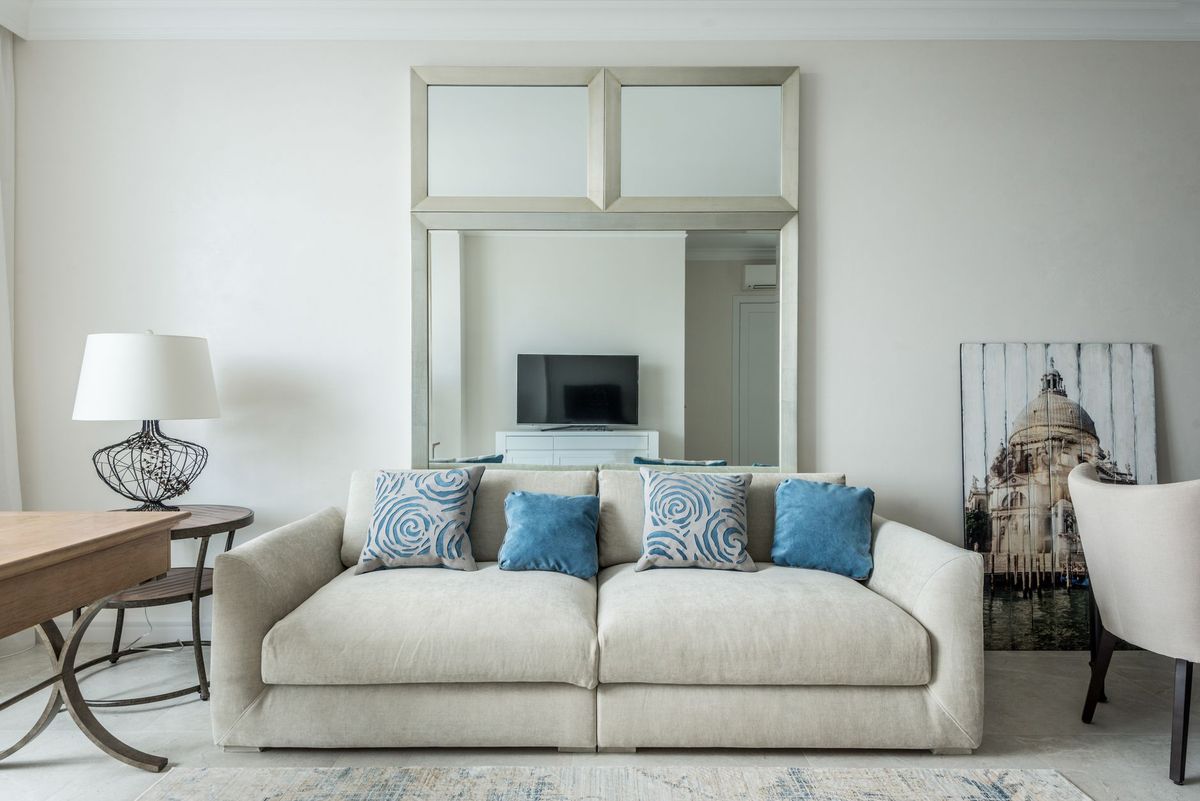
Pull the seating in. Float a sofa a little away from the wall, angle two armchairs towards it, and put the rug underneath the whole group so it reads as one soft island. The space behind the sofa can hold a slim console, a lamp and a plant, and it breaks up the longest straight run of wall.
In long or open-plan rooms, add something to interrupt the path of sound: a full bookcase, a padded ottoman, a folding screen, a large plant. None of these are acoustic products, but they all scatter and absorb a little energy, and together they make a real difference.
Mistake Five: Walls and Ceilings That Give Nothing Back
Minimalism photographs beautifully, but a room with bare plaster, hard floors and a handful of hard objects will always sound clinical. Texture is the fix, and it does not mean clutter.
Textile wall hangings, a woven panel, framed fabric art or a quilt hung on a batten all add soft surface. So does a full bookcase, particularly one with books, boxes and baskets rather than open gaps. Plants bring moisture and irregular shapes into the room, which helps a little. On a practical note, keep any fabric well away from spotlights, radiators and woodburners, and check the fire-resistance labelling on anything you hang or upholster.
If you rent, or simply dislike drilling, freestanding screens, leaning textile panels and heavy curtains hung on tension rods give you most of the benefit with none of the damage. Picture-hanging strips hold small, light pieces well.
A Practical Plan for a Quieter Room
You do not need to do all of this at once. Work downward and outward, and stop when the room sounds the way you want it to.
- Start with the floor. A generous rug plus a felt underlay under the main seating or dining area.
- Dress the window. Lined, floor-length curtains, or a fabric blind if space is tight.
- Soften the seating. One upholstered piece, a slipcover, or a deep-filled cushion in each chair.
- Bring the furniture in. Float the main group on the rug rather than hugging the walls.
- Break up the walls. Shelving, a textile hanging, a screen, a large plant.
- Add small finishes. Felt pads under chair legs, a runner in the hall, a tablecloth on a hard dining table.
Two or three of these will usually be enough to take the hard edge off a room. If the noise is coming through shared walls or from outside rather than echoing inside, that is a different problem, and it is worth speaking to a specialist or your landlord rather than trying to solve it with cushions.
Photo: Max Vakhtbovych / Pexels