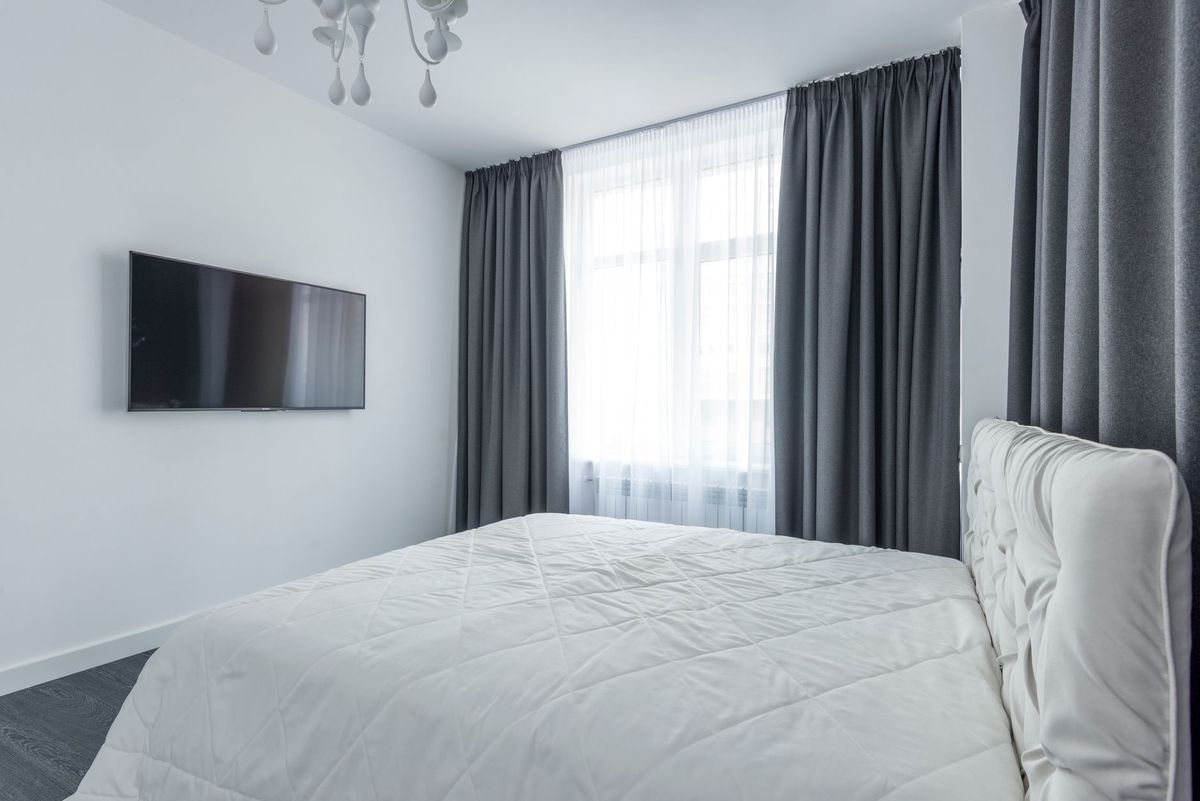
Comparison: Blackout Curtains vs Thermal Blinds for Quiet Bedrooms
If your bedroom sits above a bus route, faces a street lamp, or catches the sunrise at ten to five in June, you have probably already weighed up two options: blackout curtains or thermal blinds. Both are sold as the answer to a darker, quieter, warmer room, and the labels make them sound interchangeable. They are not. Each does one job really well and another only partly, and working out which job matters most in your room will save you money and a second round of drilling.
What each one actually does
A blackout curtain is a fabric system. The blackout element is usually a coating, a bonded lining or a separate lining fabric behind the face. How well it performs depends on the whole assembly: the heading, the track or pole, how far the fabric sits from the glass, and whether light can escape around the sides.
A thermal blind is a panel that sits close to the glass. Most are roller blinds with a reflective backing, or honeycomb (cellular) blinds with pockets of trapped air. They fit inside the window recess or over it, and they leave far less hanging fabric in the room.
Light blocking: the edges decide everything
If you want a genuinely dark bedroom, the fabric is only half the story. Light finds gaps, and gaps are where most purchases fail.
Blackout curtains
A good blackout curtain still leaks light down the sides, across the top and through the centre split. The fixes are old-fashioned and effective: overlap the two panels by a good hand’s width in the middle, fit a track that runs wider than the window rather than just across it, take the curtains to the floor, and add a pelmet or a ceiling-fixed track so the top corner becomes a shadow. A modest blackout curtain fitted like this will beat an expensive one hung on a short pole.
Thermal blinds
Blinds cover the glass very effectively, particularly blackout rollers and honeycomb blinds with side channels. The weakness is the perimeter. An inside-recess blind leaves a bright halo around the edges; fitting it outside the recess and overlapping the wall by a few centimetres on each side removes most of that. If you need near-total darkness — a light-sensitive sleeper, or someone working nights — blinds alone rarely get you there without a pelmet or a curtain over the top.
Sound: curtains have the edge, but neither silences a road
Here is the part that disappoints people. Neither product will quieten a busy street on its own.
Heavy, pleated, lined curtains absorb some sound inside the room and add a little mass at the window, which takes the sharpness off traffic noise. The air gap between curtain and glass helps a bit more. Blinds sit right against the pane, so there is no gap to work with, and thin rigid surfaces tend to reflect sound rather than soak it up. A thick honeycomb blind on a well-sealed frame will do more than a flimsy roller, but the difference is modest.
If noise is your main problem, spend on the window itself: seal the gaps around the frame, look into secondary glazing or thicker glass, and treat fabric as the finishing layer. In a rented flat, a heavy curtain hung over an existing blind is the most realistic improvement you can make without structural work.
Warmth, draughts and condensation
Thermal blinds work by trapping air or reflecting heat back into the room. Honeycomb blinds create small air pockets that slow heat loss through the glass, and reflective-backed rollers bounce radiant heat back inside. They perform best fitted snugly, with as little gap around the edges as you can manage.
Lined curtains insulate too, but only when they are hung properly. Floor-length, generously wide, on a track close to the ceiling, they create a pocket of still air between fabric and glass — and that pocket is what keeps the room warmer. Hang curtains over a radiator and you trap heat behind them where it does nothing for the room. Short curtains that stop at the sill are decorative rather than insulating.
One caution: covering a window tightly reduces ventilation and encourages condensation on the glass. Keep a trickle vent open, or air the room for ten minutes each morning. If you already have persistent damp or mould around the window, speak to a qualified damp specialist before covering it up.
Cost, fitting and upkeep
Prices vary enormously by size, fabric and whether you buy off the shelf or made to measure, so treat any comparison as a shape rather than a number. The pattern is fairly consistent, though:
- Blinds cost less per window at the budget end, with honeycomb and perfect-fit versions at the top of the range.
- Curtains are often cheap to buy and rarely cheap to hang well — a wide track, a proper lining and enough fabric to pleat all add up.
- Blinds are easier to fit yourself in a recess and take up almost no wall space.
- Curtains need room for a track or pole, and a wide window may need fixings you trust into the wall or lintel.
- Dusting is quicker on blinds; curtains need vacuuming or washing, and blackout coatings dislike hot washes.
- Both can be upgraded later — add a curtain over a blind, or have a heavier lining made for curtains you already own.
Picking the right option for your room
Choose blackout curtains if you need maximum darkness, you sleep next to a street, or you want the softness and sound-damping that fabric brings. Fit a wide track and a pelmet.
Choose thermal blinds if you have a small window, limited wall space, or a radiator under the sill. Perfect-fit blinds on tilt-and-turn windows are a tidy solution, and they suit rooms where curtains would crowd the bed.
Choose both if you want the best practical result: a blackout blind for everyday control, plus a lined curtain for warmth, darkness and a little relief from noise at night.
Making it work in practice
- Measure the window and decide where the covering will sit — inside the recess for a neat look, overlapping the wall for darkness.
- Seal the obvious gaps first with draught strip or a brush seal on the frame. It is cheap and it makes everything else perform better.
- Overlap generously at the sides, then deal with the top. That is where most stray light enters.
- Keep the trickle vent clear and air the room daily, especially in winter.
- Live with it for a week before buying anything else. Most rooms need a tweak, not an upgrade.
Start with the problem that actually wakes you up. If it is light at half past four, fix the edges. If it is cold feet at two in the morning, fix the glass. If it is the road, accept that fabric softens rather than solves, and put your budget into the window frame first.
Photo: Max Vakhtbovych / Pexels