How to Create a Quiet Corner in a Small UK Flat Without Soundproofing
Most UK flats come with a version of the same problem. You can hear next door's hoover; next door can hear yours. The floorboards carry footsteps, the boiler clicks, and the main door of the building bangs at eleven at night. Proper soundproofing means building a room within a room, which is costly, disruptive and usually impossible when you rent.
A quiet corner is a smaller ambition. It is not silence — it is a defined spot that feels calmer than the rest of the flat: low light, soft surfaces, one comfortable seat, no phone. You can build that in an afternoon and refine it over a month.
Find the Corner Your Flat Already Wants to Use
Spend a week noticing rather than rearranging. Where do you already drift with a mug of tea? Which corner collects bags and coats because nobody knows what to do with it? Which patch of floor do you never walk across?
Then listen. Walk around the flat and work out where the noise actually comes from: the party wall, the ceiling, the front door, the pipework behind the kitchen units, the bathroom above. Identify the worst two sources and choose a corner as far from them as the layout allows, ideally with at least one solid or soft mass between you and the sound. Good candidates are the shallow alcove beside a chimney breast, the end of a hallway, the space behind a door that never opens fully, and the corner of a bay window if the road outside is quiet when you will use it.
Block the Obvious Gaps Before You Buy Anything
More flat noise travels through gaps than through walls. Before you spend anything on furniture:
- Fit a brush or foam draught excluder to the front door and to any internal door facing a shared hallway. It cuts corridor noise as well as cold air.
- Check the letterbox flap and, in older flats, the keyhole cover.
- Roll a towel along the bottom of a door to test how much difference it makes before you commit to a proper seal.
- Rubber feet or a mat under a washing machine or fridge will quiet a buzz you have stopped hearing.
- Close the kitchen door when the extractor or dishwasher is running.
If you rent, ask before drilling or screwing anything into a door frame. Many landlords will agree to a seal, and some will fit one themselves.
Soften Hard Surfaces
Sound bounces off bare floorboards, plaster, glass and tiles. Soft, thick, textured things absorb it — and they change how a room feels at the same time.
- Floor: one large rug beats three small ones. Look for wool or a dense pile, and add an underlay or felt pad. A rug that reaches under the front legs of your chair does far more than a small mat in front of it.
- Windows: floor-length curtains, lined if possible, hung wider than the window so they can be drawn across the wall as well as the glass.
- Walls: a full bookshelf works as storage and as a soft, uneven surface. So does a fabric pinboard, a heavy wall hanging or a large stretched canvas.
- Seating: upholstered beats plastic and metal. Cushions, a throw and a footstool add absorbent material exactly where you sit.
- Doorways: a heavy curtain across an open doorway is a quick, reversible way to add mass.
Build the Corner in Four Layers
A seat that is only for sitting
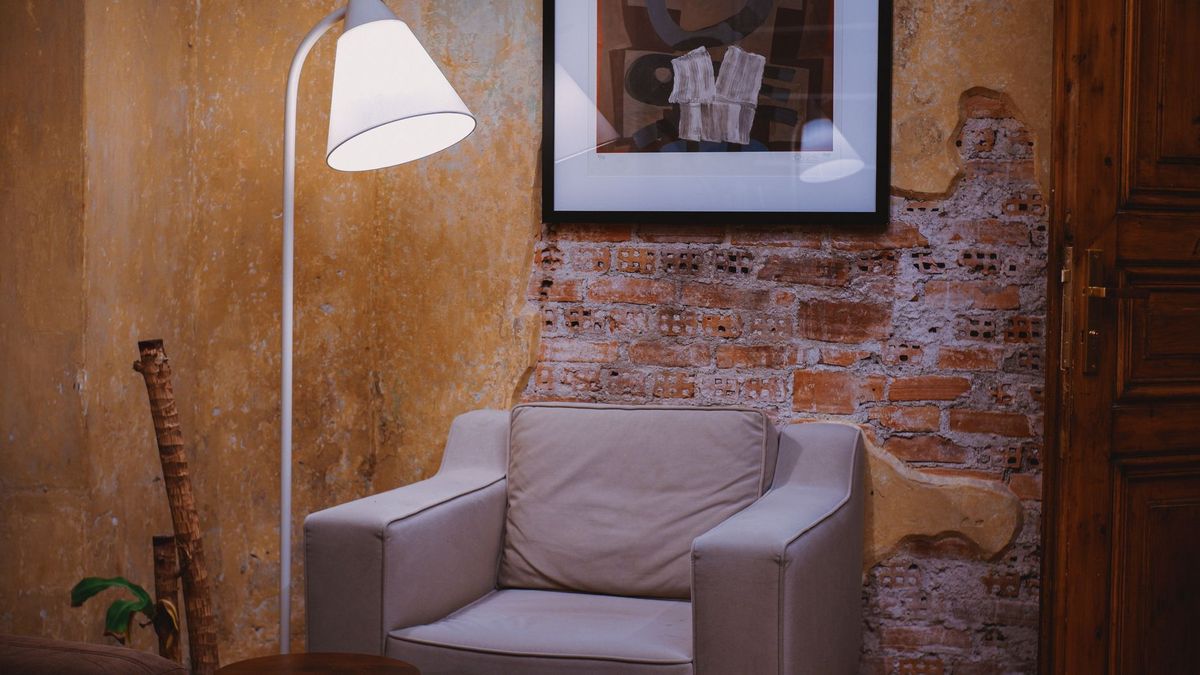
An armchair with arms and a firm back, high enough that you can stand up without pushing off your knees. In a very small flat, a wide floor cushion, a beanbag or a folding chair with a sheepskin will do. Second-hand armchairs are cheap and often better made than new ones; check the frame, then wash the covers or cover them with a throw.
A boundary
A corner is already enclosed on two sides. Add a third edge with a slim bookshelf, a folding screen, a tall plant, or a curtain rail across an alcove. Blocking the sightline to the rest of the flat is most of the psychological effect.
Light at low level
One warm lamp, placed below eye level when you are sitting. A dimmable bulb, or a bulb you can turn down from your phone, is worth the small extra cost. If you cannot wire anything in, use a plug-in wall light or a rechargeable table lamp.
Somewhere to put a mug
A small side table, a stool or a wall shelf. Add a basket for a blanket and a tray for the lamp, book and glasses, so the surface does not quietly become a dumping ground.
A Ten-Minute Reset Routine
A corner turns into a laundry pile unless it has a habit attached. Try this:
- Put the phone in another room or in a drawer.
- Switch the main light off and the lamp on.
- Take the blanket out of the basket and put it over your knees.
- Set a timer for fifteen or twenty minutes — a kitchen timer, or your phone in aeroplane mode.
- Do one thing only: read, write, listen to an album, or sit with a cup of tea and nothing else.
- When the timer goes, fold the blanket, switch the lamp off and leave the chair empty.
The last step matters more than it sounds. Tidy and waiting, the corner stays a place. Covered in coats, it stops being one.
Protect It Day to Day
Quiet is easier to keep than to create. In a shared flat, agree a rough quiet hour in the evening; most people will trade one for something they want. A fan or a low background-noise recording can mask traffic and muffled voices, and headphones are the honest answer when someone else's television is the problem.
If noise from a neighbour is persistent and is affecting your sleep or your health, your local council's environmental health team handles statutory nuisance complaints and can advise on next steps. For ongoing stress or sleep problems, speak to your GP.
Start With One Corner This Weekend
Choose the corner, empty it, and build the smallest version first: a rug, a lamp, a chair that faces into the room rather than towards the television. Sit in it for twenty minutes before deciding what to add. Most quiet corners end up needing less than people expect — some softness, a warm light, a boundary and a reason to go there. The rest is routine.
Photo: Ferhat Kocakaya / Pexels